.png)


TL;DR: Contact Center Automation Trends for 2026
Contact center automation in 2026 is no longer about replacing agents — it's about building a system where AI handles the repetitive work while humans focus on conversations that require judgment, empathy, and expertise. The biggest shifts happening right now:
The CCaaS market is projected to grow from $7.27 billion in 2025 to $39.25 billion by 2034, and Gartner predicts conversational AI will reduce agent labor costs by $80 billion by 2026. The companies that adapt now will build a durable competitive advantage. Those that wait will fall behind.
What Is Contact Center Automation?
Contact center automation is the use of AI, machine learning, and software workflows to handle routine customer service tasks without human intervention — while augmenting the capabilities of live agents for complex interactions. It encompasses everything from intelligent call routing and AI-powered chatbots to automated after-call work, real-time transcription, and predictive analytics.
Unlike the basic IVR systems of a decade ago that forced callers through rigid phone trees, modern contact center automation uses natural language processing (NLP) to understand intent, conversational AI to hold real dialogues, and CRM integrations to pull customer context in real time. The result is faster resolution, lower operational costs, and a better experience for both customers and agents.
According to IBM, the key components of modern contact center automation include interactive voice response (IVR), AI chatbots, robotic process automation (RPA), automatic call distribution (ACD), natural language processing (NLP), and CCaaS platforms. When combined, these technologies create an ecosystem where automated systems and human agents collaborate to deliver better outcomes than either could alone.
Why Contact Center Automation Matters More Than Ever
The numbers tell a clear story:
- The CCaaS market is growing at a 20.6% CAGR, expected to reach $39.25 billion by 2034
- Agent labor costs represent up to 95% of contact center expenses — and Gartner projects conversational AI will cut $80 billion of that by 2026
- 85% of customer service leaders now use conversational AI, per Gartner
- 1 in 10 agent interactions will be fully automated by 2026, up from 1.6% just a few years ago
- 94% of customers say a positive service experience makes them more likely to repurchase, according to Salesforce
- 68% of Americans refuse to answer calls from unknown numbers — making branded calling and caller ID management essential
The pressure is coming from every direction: customers expect faster resolution, agents are burning out on repetitive tasks, labor costs keep rising, and competitors are already deploying AI. Contact center automation isn't a future initiative anymore — it's a present-tense survival strategy.
The 10 Contact Center Automation Trends Reshaping 2026
1. AI Voice Agents Replace Traditional IVR
The biggest shift in contact center automation is the move from rigid IVR menus ("Press 1 for billing, press 2 for support") to AI voice agents that can hold natural conversations, understand context, and resolve issues end-to-end.
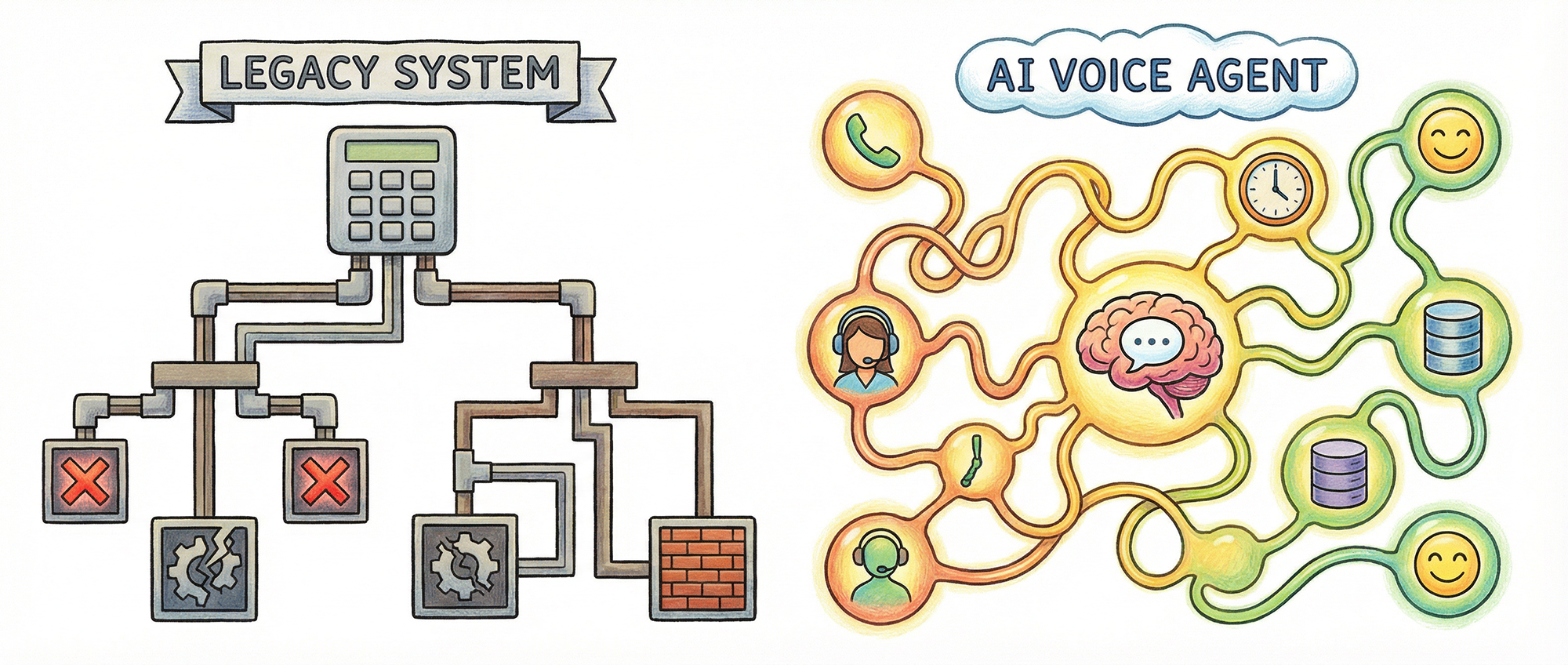
These aren't the robotic phone bots of five years ago. Modern AI voice agents use large language models and natural language understanding to have real dialogues — qualifying leads, answering product questions, scheduling appointments, processing returns, and routing calls to the right department based on the caller's actual needs, not their keypad selection.
Aloware's Intelligent Voice Assistant (IVA) handles inbound calls with natural-sounding AI that can qualify leads, answer FAQs, book appointments, and seamlessly transfer to a live rep with full context. For sales teams, the AI Voice Agent handles call handling at scale — so your reps spend time on conversations that close deals, not on routing calls that a machine could handle.
Industry analysts predict AI automation rates in contact centers will increase fivefold by 2026. Voice AI platforms are now automating 50-70% of high-volume, repetitive calls — freeing human agents for complex issues that need empathy and creative problem-solving.
2. Agentic AI and Multi-Agent Orchestration
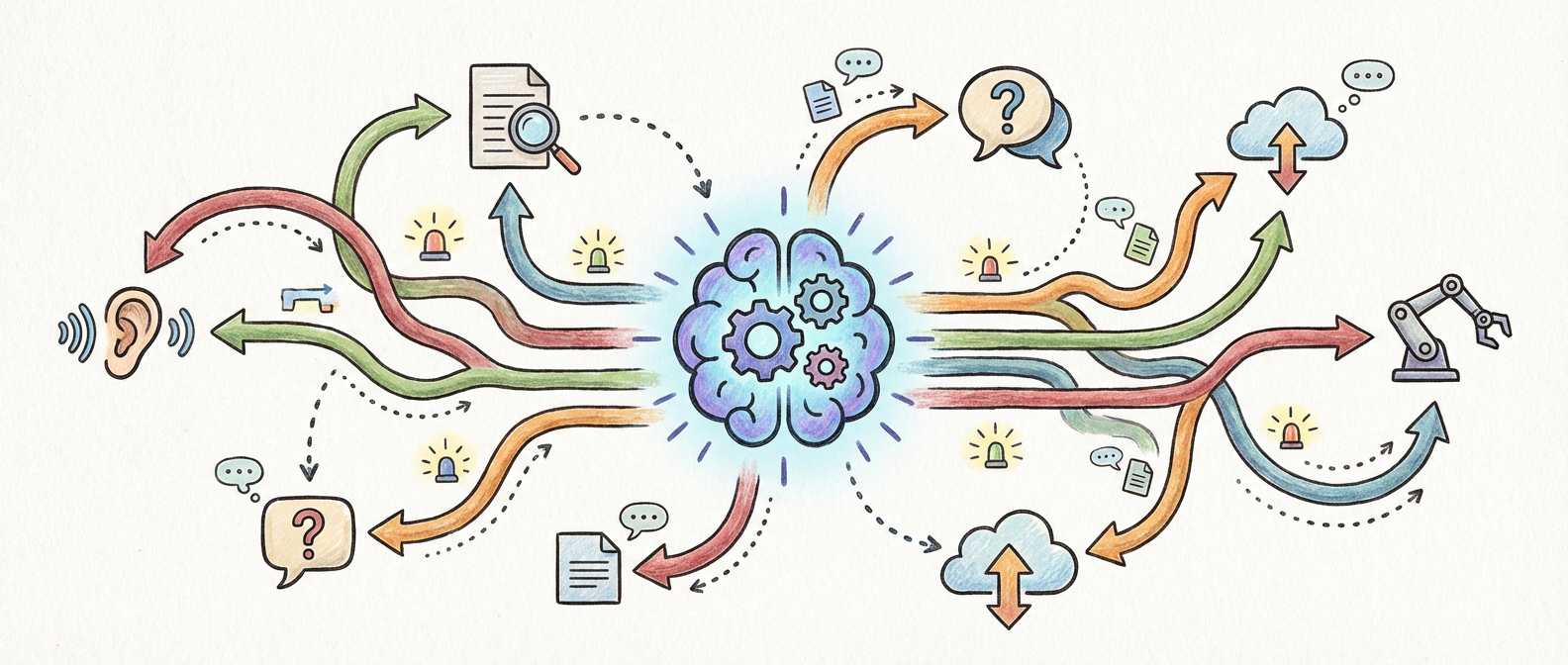
2026 marks a shift from single chatbots to agentic AI — systems where multiple specialized AI agents work together on complex tasks. Instead of one AI trying to do everything, you have a frontline agent that handles initial triage, an escalation agent for edge cases, and expert agents (or humans) for high-stakes conversations.
This mirrors how real contact centers work. A frontline AI identifies the caller, verifies their account, and handles routine requests. If the issue is more complex, it passes full context to a specialized agent — or a human rep. The key difference from traditional automation is that agentic AI can reason, plan, and execute across multiple systems, not just follow predefined scripts.
For contact center leaders, this means moving from "can we automate this one task?" to "can we automate this entire workflow?" It's the difference between automating a single email response and automating the entire lead qualification and follow-up process from first touch to booked meeting.
3. Real-Time Sentiment Analysis and Conversation Intelligence
AI is no longer just transcribing calls after they happen — it's analyzing them in real time. Modern conversation intelligence tools monitor tone, word choice, speaking patterns, and emotional cues as conversations unfold.
What does this look like in practice? If a customer's frustration level spikes during a call, the system can:
- Alert a supervisor to join or listen in
- Surface recommended responses for the agent
- Auto-trigger a discount or retention offer
- Flag the interaction for priority follow-up
On the agent coaching side, conversation intelligence identifies which talk tracks close deals, which phrases trigger objections, and where reps consistently lose momentum. Instead of manually reviewing random call samples, managers can evaluate every interaction with AI-powered scoring.
Aloware's AI Conversation Insight transcribes calls and surfaces actionable intelligence — identifying winning patterns, coaching opportunities, and compliance risks across your entire team. Combined with CSAT surveys, you get a complete picture of how every customer interaction went.
4. True Omnichannel Unification
Customers expect to start a conversation on chat, continue it via text, and close it over the phone — without repeating themselves. In 2026, the contact centers winning on customer experience are those that unify every channel into a single agent view.
This goes beyond just offering multiple channels. True omnichannel means:
- A customer's SMS conversation history appears when they call in
- A rep can see every email, text, call recording, and chat interaction in one timeline
- Automated workflows span channels — a missed call triggers a text, which triggers an email follow-up if there's no reply
- CRM data syncs bidirectionally so no information lives in a silo
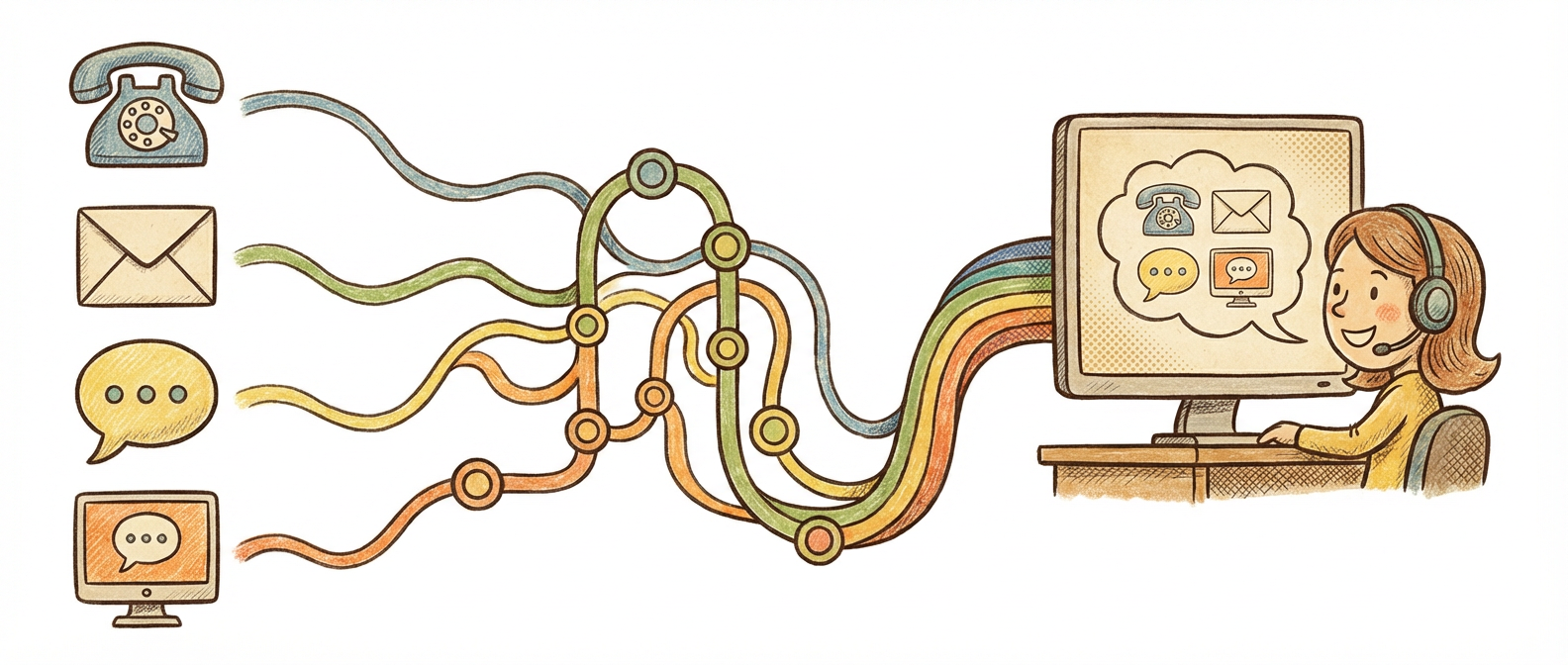
Aloware's contact center platform brings voice, SMS, email, and AI together in one interface — with every interaction logged to your CRM. Reps don't switch between tabs. Managers don't reconcile data across platforms. Everything lives in one place.
By 2026, omnichannel solutions are projected to account for 45% of the CCaaS market. The businesses still running phone, email, and SMS as separate operations are creating friction their customers will no longer tolerate.
5. CRM-Native Automation and Workflow Triggers
The most impactful automation in 2026 isn't flashy AI — it's the invisible workflow automation that happens behind the scenes when your contact center tools are deeply integrated with your CRM.
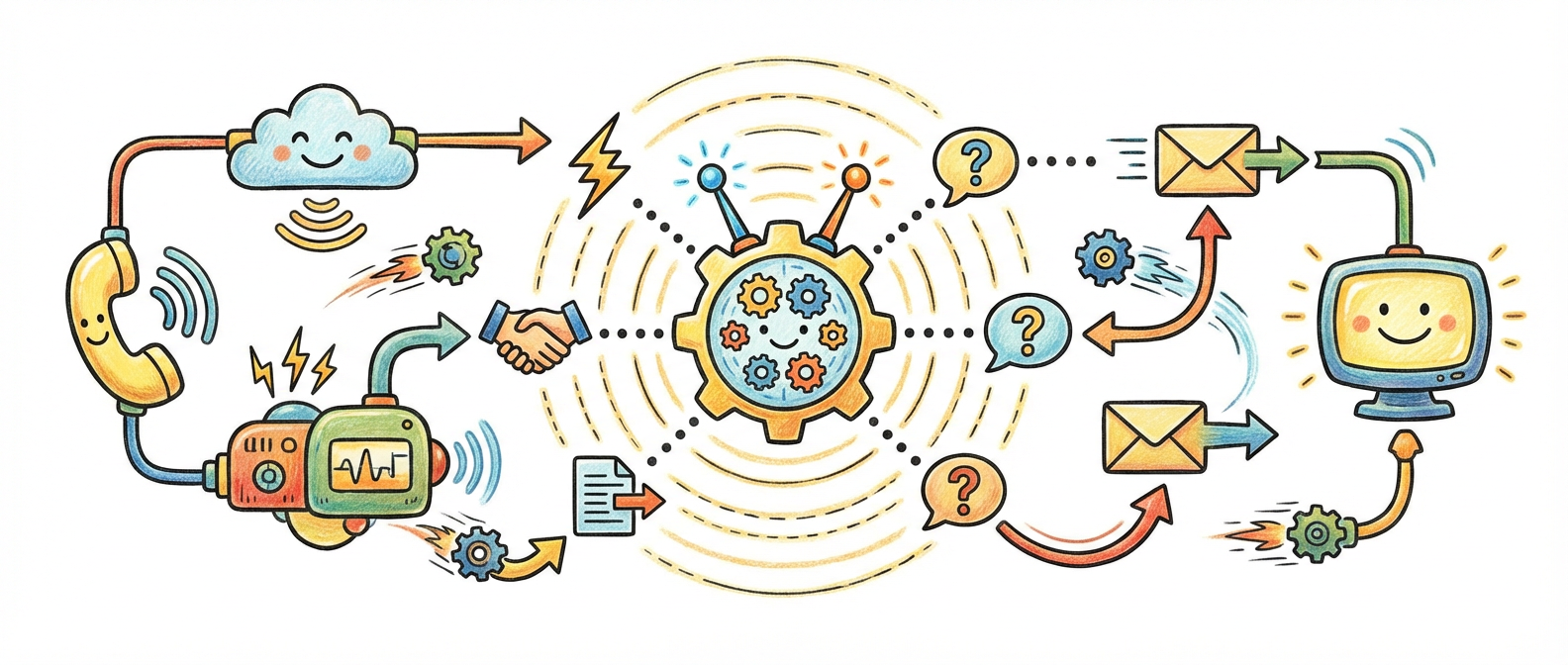
Examples of CRM-native automation:
The power is in eliminating the gap between "something happened" and "we did something about it." When Aloware integrates natively with HubSpot, Salesforce, Zoho, or Pipedrive, every call, text, and recording logs automatically to the contact's timeline. Workflows trigger across systems without manual input. Reps see full context before they pick up the phone.
6. AI-Powered Quality Assurance at Scale
Traditional QA processes evaluate a tiny fraction of customer interactions — maybe 2-5% of calls get reviewed by a supervisor. That means 95% of conversations happen with zero quality oversight.
AI-powered QA flips this completely. In 2026, leading contact centers are scoring every single interaction for accuracy, compliance, tone, and resolution quality. AI evaluates:
- Whether the agent followed required scripts and disclosures
- Sentiment and emotional dynamics throughout the call
- Phrases and techniques used by top performers vs. underperformers
- Compliance with regulations (TCPA, HIPAA, industry-specific requirements)
- Customer effort and satisfaction signals
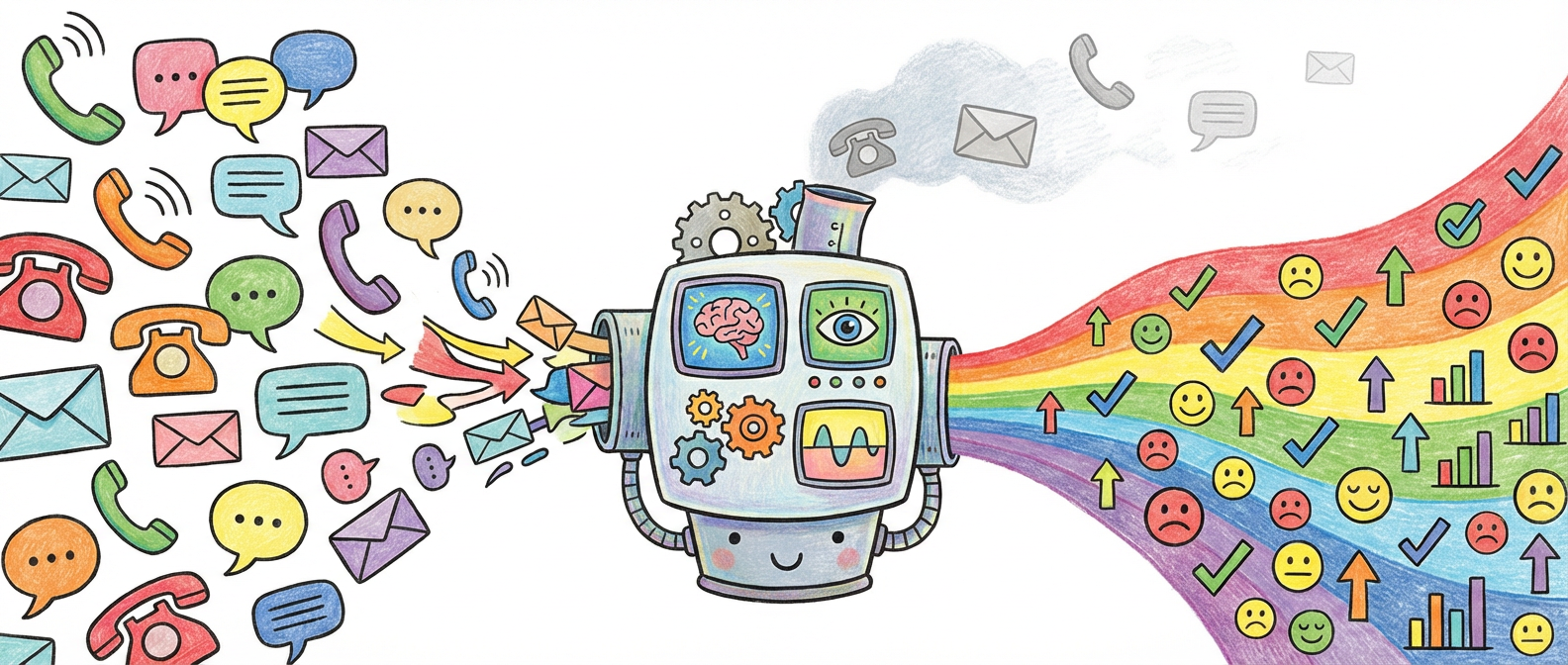
This doesn't replace human coaching — it supercharges it. Managers get data-driven insights into exactly where each rep needs help, which training programs are working, and which workflows create the most customer friction.
Aloware's AI Conversation Insight and automated call scoring enable this at scale. Instead of guessing which reps need coaching, you know — backed by data from every conversation.
7. Branded Calling and Caller ID Trust
Here's a trend that doesn't get enough attention: 68% of Americans refuse to answer calls from unknown numbers. For outbound sales and support teams, this is devastating. If your calls show up as "Unknown" or get flagged as "Spam Likely," your contact rates plummet regardless of how good your agents are.
In 2026, branded calling — where your business name and logo appear on the recipient's caller ID screen — is becoming a competitive necessity, not a nice-to-have.
Aloware's Branded Calling displays your business name on outbound calls, increasing answer rates by making your calls recognizable and trustworthy. Combined with NumberGuard, which monitors and protects your phone numbers from spam flagging, and Compliant Calling features that ensure TCPA compliance, your contact center maintains a clean, trusted calling reputation.
This also ties directly into local presence dialing — calling prospects from a local area code to increase pick-up rates. Together, these features can increase contact rates by 30-40% compared to calling from unrecognized numbers.
8. SMS Automation as a Core Contact Center Channel
SMS is no longer a marketing afterthought — it's a primary contact center channel. With 90%+ open rates and average response times under 3 minutes, text messaging is the fastest way to reach customers for time-sensitive communications.
Contact centers in 2026 are automating SMS for:
- Appointment confirmations and reminders — reducing no-shows by 30-50%
- Post-call follow-ups — sending summaries, links, and next steps after every conversation
- Queue callbacks — texting customers their place in line instead of forcing hold times
- Proactive service alerts — outage notifications, shipping updates, account changes
- Two-way conversational support — customers text questions and get automated or agent-assisted responses
Aloware's SMS automation supports both one-on-one business texting and bulk SMS campaigns, with sequences triggered by CRM events, call outcomes, or customer behavior. The AI SMS Bot handles routine text conversations automatically — answering FAQs, booking appointments, and routing complex issues to live agents.
Critically, all business SMS in the U.S. requires A2P 10DLC registration for carrier compliance. Aloware handles this registration and ensures your campaigns stay compliant — so your messages actually get delivered.
9. Predictive Analytics and Proactive Service
The shift from reactive to proactive customer service is one of the defining trends of 2026. Instead of waiting for customers to call with a problem, AI analyzes patterns to predict issues before they escalate.
Predictive analytics in contact centers powers:
- Demand forecasting — predicting call volumes by hour, day, and season so you staff appropriately
- Churn prediction — identifying at-risk customers based on sentiment trends, reduced engagement, or support history
- Agent performance forecasting — predicting which reps will hit targets and where coaching is needed
- Proactive outreach triggers — automatically reaching out to customers who are likely to need help before they call
When combined with CRM data, predictive analytics transforms your contact center from a cost center into a revenue engine. You're not just solving problems — you're preventing them and identifying upsell opportunities in the process.
10. Agent Experience and AI-Assisted Coaching
The final trend isn't about technology — it's about the people using it. Agent burnout and turnover remain the biggest operational challenge in contact centers. In 2026, the companies retaining talent are those using automation to improve the agent experience, not just the customer experience.
AI-assisted agent tools now provide:
- Real-time coaching prompts during live calls (suggested responses, compliance reminders, objection handling tips)
- Automated after-call work — AI writes call summaries, updates CRM records, and creates follow-up tasks
- Intelligent workload distribution — routing interactions based on agent skill, availability, and energy levels
- Performance dashboards with actionable insights, not just metrics
Aloware's agent management and performance features give managers visibility into rep activity, call quality, and coaching opportunities — while features like voicemail drop and power dialer automation eliminate the repetitive tasks that cause burnout.
The research supports this approach: when agents spend less time on administrative work and more time on meaningful conversations, satisfaction rises, turnover drops, and customer outcomes improve. It's a virtuous cycle that starts with automating the work nobody wants to do.
Contact Center Automation Tools: What You Actually Need
Not every contact center needs the same tools. Here's a practical breakdown by function:
For sales-focused contact centers, the key stack is: power dialer + SMS automation + AI voice agent + CRM integration + branded calling. For support-focused operations: IVR/IVA + conversation intelligence + omnichannel messaging + QA automation + CSAT.
Aloware combines calling, texting, AI voice agents, and CRM integration into a single contact center platform starting at $30/agent/month — purpose-built for sales and support teams that need multi-channel automation without enterprise complexity.
How to Implement Contact Center Automation (Without Breaking Everything)
Rushing AI deployment without a plan leads to problems — 44% of organizations report issues from hasty AI implementation, according to industry research. Here's a phased approach:
Phase 1 (Weeks 1-4): Foundation
- Audit your current operations — where do agents spend the most time on repetitive tasks?
- Integrate your contact center platform with your CRM
- Set up basic automation: auto-call logging, voicemail drop, missed call texting
- Establish baseline metrics: handle time, contact rate, first-call resolution, CSAT
Phase 2 (Weeks 5-8): Core Automation
- Deploy AI voice agent for inbound call handling (IVA)
- Build SMS sequences for common workflows (follow-ups, reminders, appointment confirmations)
- Implement power dialer for outbound campaigns
- Set up conversation intelligence for call scoring and coaching
Phase 3 (Weeks 9-12): Optimization
- Launch branded calling and number management
- Build behavior-triggered workflows (pricing page visit → auto-call, missed call → auto-text)
- Roll out AI-powered QA across all interactions
- Implement predictive analytics for demand forecasting and churn detection
Phase 4 (Ongoing): Refinement
- A/B test messaging, scripts, and sequences
- Refine AI voice agent based on conversation data
- Expand automation to new use cases and channels
- Track ROI monthly and double down on what works
The Future Is Already Here
The contact center of 2026 looks nothing like the contact center of 2020. The shift from reactive, phone-only support to proactive, AI-augmented, multi-channel operations is already happening — and the gap between early adopters and laggards is widening every quarter.
The companies building durable competitive advantage are the ones that:
- Deploy AI voice agents to handle routine calls while humans handle complex ones
- Unify every channel — phone, SMS, email, chat — into a single platform with shared context
- Automate CRM workflows so nothing falls through the cracks
- Use conversation intelligence to coach agents from data, not gut feeling
- Protect their calling reputation with branded caller ID and compliance infrastructure
Aloware is built for this future — a cloud-based contact center platform that combines AI voice agents, power dialing, SMS automation, conversation intelligence, and native CRM integration in one platform, starting at $30/agent/month.
Book a demo to see how Aloware can automate your contact center operations.
Start your free trial and experience the platform today.
Frequently Asked Questions
What is the ROI of contact center automation?
Most organizations see positive ROI within 3-6 months. Key drivers include reduced average handle time (20%+ improvement), lower agent turnover (15%+ reduction), decreased cost per interaction, higher first-call resolution rates, and improved customer satisfaction scores. Gartner projects conversational AI will reduce agent labor costs industry-wide by $80 billion by 2026.
What are the biggest contact center automation trends in 2026?
The top trends include AI voice agents replacing traditional IVR, agentic AI with multi-agent orchestration, real-time sentiment analysis, true omnichannel unification, CRM-native workflow automation, AI-powered quality assurance at scale, branded calling for caller ID trust, SMS as a core service channel, predictive analytics for proactive service, and AI-assisted agent coaching. The overall shift is from reactive support to predictive, AI-augmented operations.
Will AI replace contact center agents?
No. AI automates repetitive, rule-based tasks — lead qualification, call routing, data entry, appointment booking, and FAQ responses. Human agents remain essential for complex problem-solving, emotionally sensitive conversations, negotiations, and relationship building. The industry is moving toward an AI + human model where automation handles volume and agents handle value. Gartner estimates there are still approximately 17 million active contact center agents globally as of 2025.
How much does contact center automation cost?
Costs vary widely by platform and scope. Basic cloud contact center platforms start around $25-50/user/month for core calling and routing features. Full-featured platforms with AI voice agents, SMS automation, CRM integration, and analytics typically run $50-150/user/month. Enterprise solutions with predictive analytics and advanced AI can exceed $200/user/month. Aloware's contact center platform starts at $30/agent/month with calling, texting, AI, and CRM integration included.
What is the ROI of contact center automation?
Most organizations see positive ROI within 3-6 months. Key drivers include reduced average handle time (20%+ improvement), lower agent turnover (15%+ reduction), decreased cost per interaction, higher first-call resolution rates, and improved customer satisfaction scores. Gartner projects conversational AI will reduce agent labor costs industry-wide by $80 billion by 2026.
What's the difference between a call center and a contact center?
A call center handles customer interactions primarily through phone calls. A contact center manages interactions across multiple channels — phone, SMS, email, chat, social media, and more. Contact center automation is broader, encompassing all these channels, while call center automation specifically focuses on voice-based interactions. Modern businesses increasingly use contact center platforms to unify all channels in one system.
How does contact center automation integrate with CRM systems?
Modern contact center platforms integrate natively with CRMs like HubSpot, Salesforce, Zoho, and Pipedrive. This integration enables bi-directional data syncing — every call, text, recording, and disposition logs automatically to the contact's CRM record, while CRM events (deal stage changes, form submissions, lead score thresholds) trigger automated outreach. This eliminates manual data entry and ensures reps always have full context.
What is conversational AI in a contact center?
Conversational AI uses natural language processing (NLP) and machine learning to enable AI systems to understand, process, and respond to human language in a natural way. In contact centers, it powers AI voice agents that can hold phone conversations, chatbots that handle text-based support, and AI assistants that help agents during live interactions. Unlike basic IVR, conversational AI understands intent and context, not just keywords or menu selections.